
Libro acquistabile con carte di credito e carte prepagate Postepay.


    Libro acquistabile con Carta Docente.


    Libro acquistabile con Carta Cultura Giovani e Carta del Merito.


    Libro acquistabile in tre rate mensili Klarna.


    Il costo del libro sarà addebitato solo all’avvio della consegna.


    Scegli il punto di ritiro dei libri più comodo.

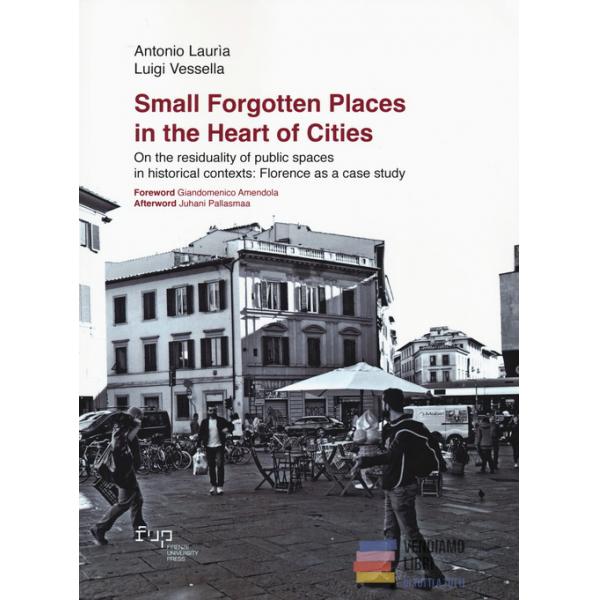
    Small forgotten places in the heart of cities. On the residuality of public spaces in historical contexts: Florence as a case st

    Riferimento: 9788855184960

    Editore: Firenze University Press
    EAN: 9788855184960
    isbook: 1
    Autore: Lauria Antonio, Vessella Luigi
    Collana: People_Places_Architecture
    In commercio dal: 12 Maggio 2022
    Pagine: 153 p., Libro in brossura
    Non disponibile
    19,90 €
    IVA inclusa
    Quantità
    Non disponibile

    Ricordati che otterrai la ricompensa del 5 per cento del prezzo di copertina quando acquisterai una copia di questo libro. La ricompensa potrà essere utilizzata per pagare i tuoi prossimi acquisti, oppure essere convertita in codici voucher o bonificata sul tuo conto bancario.
    Aderisci al nostro programma di affiliazione per proporre la vendita di questo libro. Guadagnerai commissioni ogni volta che ne favorirai la vendita.
    Chiudere

    Descrizione

    This book is the result of a research project designed and carried out at the Department of Architecture, University of Florence. This book discusses urban public spaces and, more specifically, run-down, inactive micro-spaces that are barely used due to their location, dimensions, morphology or semantic characteristics. In literature, these spaces are often defined as residual urban spaces. A large abandoned industrial area on the outskirts of a town or a small interstitial space in a historical centre can be residual. With respect to such a broad subject matter, the book seeks to radically limit the field, concentrating on public residual spaces found in the oldest parts of cities. The book reflects on this theme and introduces a method for reading and assessment of the residuality of public spaces in historical contexts (Residuality Assessment Process) which was tested in the historical centre of Florence. It is the authors' view that residual spaces, above all if designed according to a system logic, can go from being problems to potential activators of urban and social regeneration processes, offering a useful contribution to improve city life. Foreword Giandomenico Amendola. Afterword Juhani Pallasmaa.
    E-book non acquistabile