
Libro acquistabile con carte di credito e carte prepagate Postepay.


    Libro acquistabile con Carta Docente.


    Libro acquistabile con Carta Cultura Giovani e Carta del Merito.


    Libro acquistabile in tre rate mensili Klarna.


    Il costo del libro sarà addebitato solo all’avvio della consegna.


    Scegli il punto di ritiro dei libri più comodo.

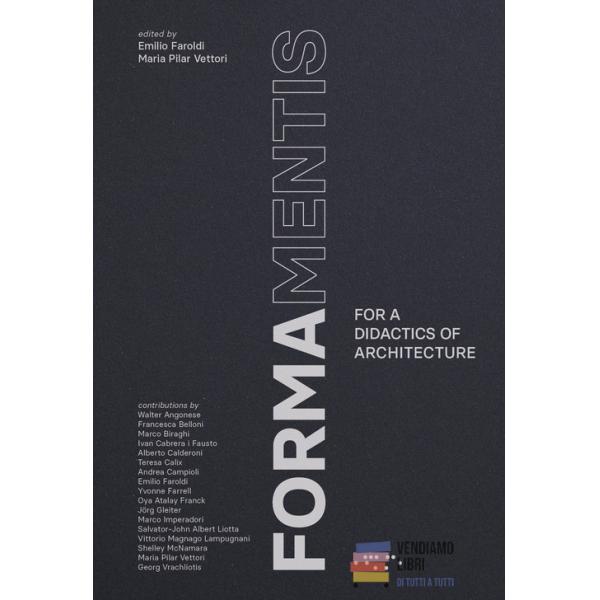
    Formamentis. For a didactics of architecture

    Riferimento: 9791256440238

    Editore: LetteraVentidue
    EAN: 9791256440238
    isbook: 1
    Autore: Faroldi E. (cur.), Vettori M. P. (cur.)
    Collana: Alleli/Research
    In commercio dal: 26 Febbraio 2025
    Pagine: 188 p., Libro in brossura
    Non disponibile
    22,00 €
    IVA inclusa
    Quantità
    Non disponibile

    Ricordati che otterrai la ricompensa del 5 per cento del prezzo di copertina quando acquisterai una copia di questo libro. La ricompensa potrà essere utilizzata per pagare i tuoi prossimi acquisti, oppure essere convertita in codici voucher o bonificata sul tuo conto bancario.
    Aderisci al nostro programma di affiliazione per proporre la vendita di questo libro. Guadagnerai commissioni ogni volta che ne favorirai la vendita.
    Chiudere

    Descrizione

    We live in a historical period where teaching and learning are constantly evolving to meet current and future needs. The goal is to restore the central role of the teacher as a guide within educational paths, in contexts that rethink professions and trades. The reflection on universal educational principles initiates a debate on architectural education, which must integrate scientific, humanistic, and technical knowledge, combining an experiential and experimental approach. The maieutic teaching method interprets the ideational, planning, and constructive dimensions as integrated elements of the architectural process. Methods and tools are means, not ends, of an open teaching framework that responds to individual needs. The book presents a comparison between prominent figures from leading European Architecture Schools, offering a contribution to the debate on the most significant practices in architectural education. The architect, seen as an intellectual, requires both scientific and holistic training, capable of merging interdisciplinary research, technical knowledge, and sensitivity to form and space, combining technique and poetics in design. This work aims to contribute to the debate on architectural education, emphasizing the importance of practical experience as a fundamental learning action.
    E-book non acquistabile